
Fall Container Garden Ideas: Plants, Designs, and Frost-Proof Tips for 2026

The best fall container gardens combine frost-tolerant plants, mums, ornamental kale, pansies, and ornamental grasses, arranged with the thriller-filler-spiller method, planted in a freeze-resistant container that won't crack when temperatures drop. Buy mums in bud rather than full bloom for the longest color, choose ornamental kale and cabbage that actually deepen in color after a light frost, and pick a container built to stay outdoors through the season. With those choices, a fall container stays vibrant from the first cool nights well into winter.
As summer containers start to fade, fall is the moment to refresh your patio, porch, and entryway with rich, seasonal color. This guide covers the best fall container plants and how to combine them, the color schemes that define autumn, the one container decision that determines whether your display survives the first frost, and how to carry a fall planting straight through into winter. Austram has manufactured garden products since 1981, and these are the ideas and products that make fall containers work.
Why Fall Containers Garden Ideas Are Worth It
By late summer, most container plantings look tired, leggy annuals, sparse blooms, spent flowers. Rather than let the display fade, fall is the ideal time to replant with fresh seasonal color that peaks as the summer garden is winding down. Fall containers deliver instant curb appeal for the season's gatherings, extend the useful life of your patio and porch by months, and transition naturally into winter décor with a few simple swaps.
Better still, many fall plants are tougher than summer annuals. Ornamental kale and cabbage actually intensify in color after a light frost, pansies bloom into late autumn and often return in spring, and garden mums are hardy perennials that can go into the ground once they finish. A fall container is not a last gasp of the season; it's one of the most rewarding plantings of the year.
The Thriller-Filler-Spiller Formula for Fall
The same reliable design formula that anchors any great container works beautifully for fall: a tall thriller for height and drama, rounded fillers for fullness and color, and trailing spillers to soften the edge. The autumn plant palette simply adjusts the summer one.
Fall thrillers: Ornamental grasses are the standout choice, fountain grass, maiden grass, pink muhly grass, or switch grass bring movement and height. Upright ornamental kale like 'Redbor', tall celosia, or a small shrub such as boxwood, nandina, or holly also works as a structural centerpiece.
Fall fillers: Mums are the classic filler and the star of the season. Surround them with rosette-type ornamental cabbage and kale, ornamental peppers, coleus, heuchera (coral bells), rainbow chard, and pansies or violas for dense, layered color.
Fall spillers: Creeping Jenny, sedum, calibrachoa, trailing pansies and violas, and licorice plant all cascade over the rim to give the container that finished, intentional look.
For the full breakdown of how the thriller-filler-spiller method works and more design combinations, see our complete container guide:
The Best Plants for Fall Containers
The right plant choices make a fall container that lasts. The table below covers the most reliable performers, their role in the design, and, critically for the season, how they handle frost.
Plant | Role | Frost Tolerance | Notes |
Garden mums | Filler / accent | Light frost OK | Buy in bud, not full bloom, for longest color; hardy perennial in zones 5–9 |
Ornamental kale & cabbage | Filler / thriller | Improves after frost | Color intensifies in cold; upright types are thrillers, rosettes are fillers |
Pansies & violas | Filler / spiller | Very hardy | Bloom in late autumn; often return in spring in mild climates |
Ornamental grasses | Thriller | Varies by type | Maiden, pink muhly, switch grass hardy in cool zones; purple fountain grass zones 9–10 |
Ornamental peppers | Filler / accent | Tender | Fiery reds and oranges; bows out at first hard frost |
Coleus | Filler | Tender | Bronze/burgundy foliage until first frost; take cuttings to overwinter indoors |
Heuchera (coral bells) | Filler | Hardy perennial | Rich fall foliage tones; plant in the garden after |
Rainbow chard | Filler / edible | Hardy | Colorful stems: both ornamental and edible |
Creeping Jenny | Spiller | Hardy | Bright chartreuse trailing foliage |
Sedum | Spiller | Very hardy | Cold- and drought-tolerant cascading choice |
The mum-buying tip that matters most: choose plants that are still mostly in bud rather than in full bloom. Mums in full flower are near the end of their display; those in bud give you weeks more color. It's the single most common fall-container mistake and the easiest to avoid.
Fall Container Color Schemes

Autumn has a signature palette, and leaning into it makes a container feel intentional. Three schemes cover most fall looks:
Classic harvest: Rich oranges, golds, rusts, and deep reds, orange mums, rust heuchera, fiery ornamental peppers, and golden creeping Jenny, finished with mini pumpkins and gourds for a harvest theme.
Moody purples: Deep purple and plum, 'Redbor' kale, purple-toned ornamental cabbage, burgundy coleus, and violas in shades of eggplant, for a sophisticated, on-trend take that echoes the jewel tones dominating 2026 design.
Cool silver-and-white (winter-ready): Silvery-blue ornamental kale, white pansies, dusty miller, and licorice plant, with white or blue-green gourds, a palette that transitions seamlessly into winter décor with the addition of evergreens and a little sparkle.
Four Ready-to-Plant Fall Container Recipes
If you'd rather copy a proven combination than build one from scratch, these four recipes each follow the thriller-filler-spiller formula and cover the main fall palettes. Scale the quantities to your container size; as a rule, one thriller, three to five fillers, and three to five spillers fill a medium-to-large pot.
1. Classic Harvest. Fountain grass or maiden grass (thriller) + orange or bronze mums and ornamental kale (fillers) + golden creeping Jenny (spiller). Tuck in a mini pumpkin or two for a harvest finish. The definitive autumn look.
2. Moody Purple. Upright 'Redbor' kale (thriller) + deep purple mums and burgundy coleus (fillers) + trailing purple violas (spiller). A sophisticated, on-trend palette that echoes the jewel tones dominating 2026 design.
3. Winter-Ready Cool. A dwarf conifer or dusty miller (thriller) + silvery-blue ornamental cabbage and white pansies (fillers) + trailing sedum (spiller). Built to transition straight into winter décor with a few evergreen boughs and metallic accents.
4. Grass & Grace. Pink muhly or switch grass (thriller) + rust-toned mums and heuchera in fall foliage tones (fillers) + trailing licorice plant (spiller). Airy, textural, and modern leans on foliage and movement rather than flowers alone.
Each of these works in a single large container or, for more flexibility, split across a group of single-specimen pots you can rearrange as the season shifts.
The One Container Decision That Determines Success: Freeze Resistance

Here is the detail most fall-container guides get wrong. They recommend terracotta or ceramic pots for their autumn look, but terracotta and unglazed ceramic are porous. They absorb water into the pot wall, and when that water freezes and expands, the pot cracks from the inside out. If your fall container is going to sit outside into winter (and most do), a porous pot is a guaranteed casualty of the first hard freeze.
This is where the container itself matters as much as the planting. Austram's Vizcaya Collection is made from a composite of 65% stone and 35% recycled plastic; it has the visual weight and texture of natural stone, but it is non-porous and freeze-resistant. There is no absorbed moisture in the pot wall to freeze and crack it, so a Vizcaya planter stays outdoors through fall and winter without damage, year after year. For a fall container that carries into winter, a freeze-resistant planter is not a luxury; it's what keeps the whole display from ending up in pieces on the patio in January.
For baskets and open planters, a quality coco fiber liner manages the moisture that fall's cooler, damper weather brings — supporting drainage so roots don't sit wet as temperatures drop.
Designing Your Fall Containers
Group Single-Specimen Pots for a Flexible Display
Rather than cramming everything into one container, plant several pots, each with a single specimen, one with a mum, one with an ornamental grass, one with kale, and group them. You can rearrange the composition until it looks right, swap pieces as they fade, and scale the display up or down. It's the most flexible way to design for a season that changes week to week.
Add Vertical Structure
Height makes a fall grouping feel established. Beyond tall ornamental grasses, a structural element like an obelisk adds architectural interest; Austram's Exuma Obelisk (48" and 54" Matte Black) and Harbor Obelisk (Matte Bronze) work as a striking centerpiece, dressed with a climbing plant, dried vines, or seasonal lights as the season turns. Corn stalks or a column of twigs tucked behind a large planter deliver the same vertical lift in a rustic key.
Frame the Entry
A matched pair of planters flanking the front door is the highest-impact fall move for curb appeal. Fill each with the same thriller-filler-spiller combination for symmetry, and because these are front-facing and will likely stay out into winter, use freeze-resistant containers so the display survives to be redressed for the holidays.
Caring for Fall Containers
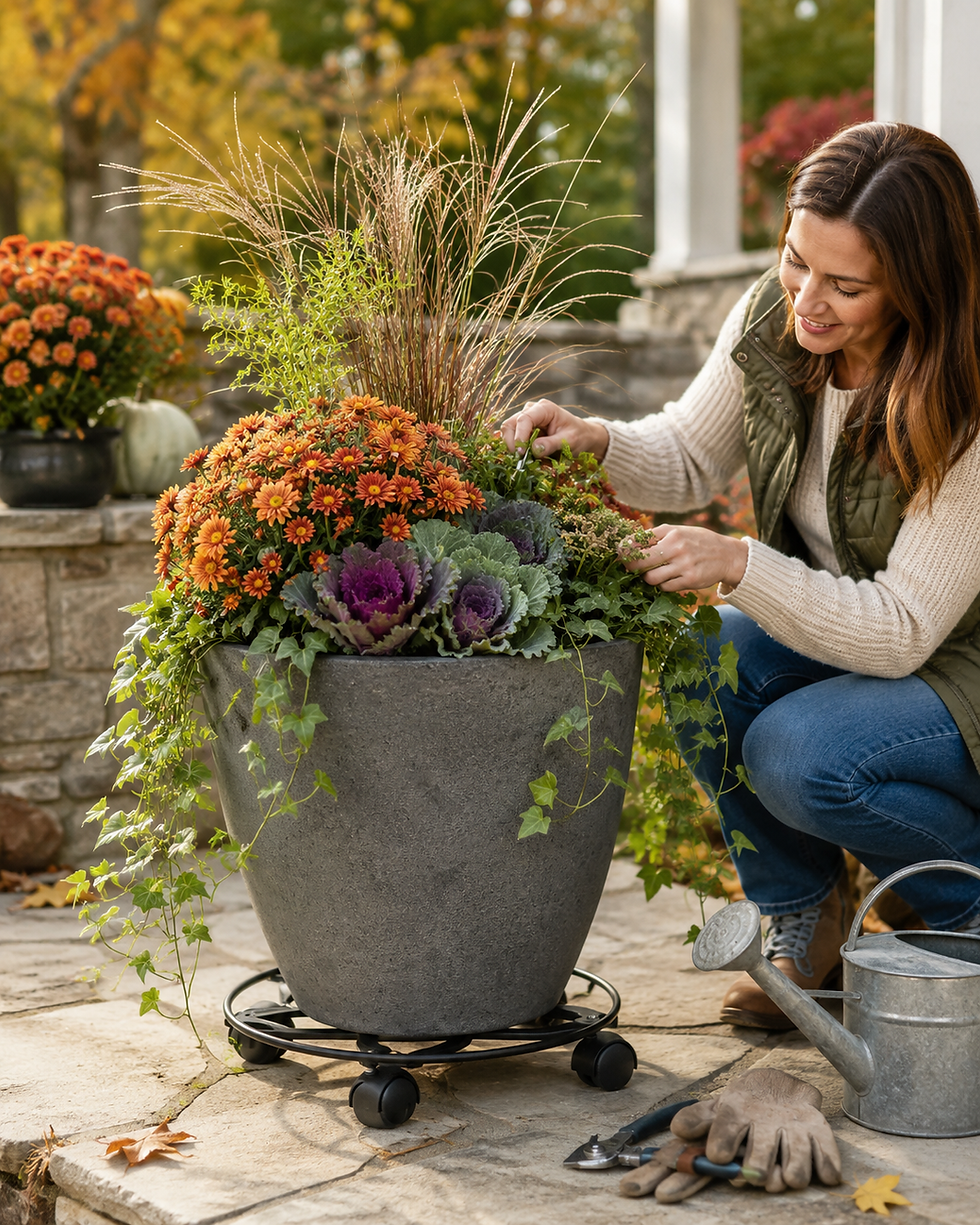
Water less, but don't stop. Cooler weather and shorter days mean containers dry out more slowly, so reduce watering frequency — but fall can be dry, and evergreens and grasses still need moisture. Check the top inch of soil and water when it's dry.
Protect from hard freezes. Most fall plants shrug off a light frost, and ornamental kale even improves. But a hard freeze will finish tender plants like coleus and ornamental peppers. On the coldest nights, move containers against the house, under a covered porch, or into a garage overnight, returning them to the light on milder days.
Make heavy pots movable. A large planted container is genuinely heavy to shift for frost protection. Austram's Lotus Plant Caddy (12" and 14") rolls up to 200 pounds on wheels and protects flooring, making it easy to move tender containers under cover before a freeze and back out afterward, a practical fall essential.
Deadhead and refresh. Remove spent mum blooms and tired foliage to keep the display looking sharp, and swap out any plant that gives up before the others so the container stays full.
Refreshing Tired Summer Containers for Fall
If you're reading this in late summer, you don't need to start from scratch. Refreshing an existing container is faster and cheaper than replanting entirely. Pull the spent, leggy summer annuals, petunias and impatiens that have stopped performing, but keep anything still going strong, like a healthy ornamental grass or a trailing sweet potato vine, as a bridge into the fall palette.
Into the gaps, tuck in fall stars: a mum or two for instant color, ornamental kale for texture, and pansies to trail over the edge. Top-dress with fresh potting mix, add a slow-release feed, and the container is transformed in twenty minutes. This late-summer lift is exactly what's trending right now, and it's the most efficient way to move a patio from summer into fall.
Transitioning Fall Containers into Winter

One of the best things about a well-built fall container is how easily it becomes a winter one. As the last tender plants fade, shift the display toward structure and evergreen interest: dwarf conifers, boxwood, holly with berries, and ornamental grasses left to stand provide form and texture through the cold months. Add cut evergreen boughs, curly willow, dried hydrangea, and a few white or metallic accents, and a fall planter becomes holiday décor without replanting.
This transition only works if the container survives the cold, which is the whole case for a freeze-resistant planter. A Vizcaya planter that held your mums and kale in October is ready to hold evergreens and lights in December, and to start again with spring bulbs when the season turns. One durable container, used all year, is both the most sustainable and the most economical approach.
Don't forget wildlife in winter: a freeze-resistant bird bath, like Austram's Abaco Bird Bath, provides a water source that's scarce in cold months and brings birds onto the patio when the garden is at its quietest.
Common Fall Container Mistakes to Avoid

Buying mums in full bloom. They're at the end of their display. Choose plants still in bud for weeks more color.
Using a container that cracks in frost. Terracotta and unglazed ceramic split when absorbed water freezes. Use a freeze-resistant planter for anything staying outdoors into winter.
Ignoring frost tolerance. Mixing tender plants (coleus, ornamental peppers) with hardy ones means the tender ones die first and leave gaps. Know which of your plants will take a frost.
Overwatering in cool weather. Containers dry more slowly in the fall. Watering on a summer schedule keeps roots too wet as temperatures drop, inviting rot.
Skipping the design formula. A pot of nothing but mums reads as flat. Use thriller-filler-spiller — grass, kale, and a trailing spiller — for a container with depth.
Forgetting the winter transition. Plant in a durable container and you can carry the same pot from fall into winter and into spring, instead of starting over each season.
Frequently Asked Questions
What are the best plants for fall containers?
The best fall container plants are garden mums, ornamental kale and cabbage, pansies and violas, ornamental grasses, ornamental peppers, coleus, heuchera (coral bells), and trailing sedum or creeping Jenny. Mums and ornamental kale are the season's stars — kale actually intensifies in color after a light frost, and pansies bloom into late autumn.
Arrange them with the thriller-filler-spiller method: an ornamental grass or upright kale for height, mums and rosette kale for fullness, and trailing pansies or creeping Jenny to spill over the edge. Choose frost-tolerant plants if the container will stay out as temperatures drop.
When should I plant fall containers?
Plant fall containers in late summer to early autumn — typically late August through September in most US regions — so the plants establish and peak as the weather cools. This timing lets you refresh tired summer containers right as they start to fade and gives mums, kale, and pansies weeks of display before hard frost.
Buy mums while they're still mostly in bud rather than in full bloom for the longest-lasting color. In warmer regions, you can plant somewhat later; in cold-winter zones, plant earlier so roots settle before the first freeze.
Will fall container plants survive frost?
Many will. Ornamental kale and cabbage tolerate frost and actually deepen in color; pansies and violas are very hardy and bloom into late autumn; and ornamental grasses, sedum, and heuchera handle cold well. Tender plants like coleus and ornamental peppers, however, are finished by the first hard freeze.
On the coldest nights, move containers of tender plants against the house, under a covered porch, or into a garage, returning them outside on milder days — a rolling plant caddy makes moving heavy pots easy. A light frost is fine for hardy fall plants; it's the hard freeze you protect against.
What container is best for fall and winter?
Use a freeze-resistant container for anything staying outdoors during winter. Terracotta and unglazed ceramic are porous — they absorb water that freezes and cracks the pot. Stone-composite planters like Austram's Vizcaya Collection (65% stone, 35% recycled plastic) are non-porous and freeze-resistant, so they stay outdoors through hard frosts without cracking.
A freeze-resistant planter also lets you carry one container from fall into winter into spring — mums and kale in autumn, evergreens and lights in December, bulbs in spring — which is both more economical and more sustainable than replacing cracked pots each year.
How do I refresh my summer containers for fall?
Pull the spent, leggy summer annuals but keep anything still healthy — like an ornamental grass or trailing vine — as a bridge. Tuck fall plants into the gaps: a mum or two for instant color, ornamental kale for texture, and pansies to trail over the edge. Top-dress with fresh potting mix and a slow-release feed, and the container is transformed in about twenty minutes.
This refresh is faster and cheaper than replanting from scratch, and it's the most efficient way to move a patio from summer into fall — exactly the late-summer container lift that's most searched for this time of year.
Final Thoughts
A great fall container comes down to a few decisions: frost-tolerant plants arranged with thriller, filler, and spiller; a color scheme that leans into autumn; the right care as the weather cools; and — the detail most guides miss — a freeze-resistant container that carries the whole display from fall into winter and back to spring. Get those right, and your patio, porch, and entryway will stay vibrant through the season when most gardens have gone quiet.
Start by refreshing what you have, choose plants that can take the cold, and plant in a container built to last outdoors. The result is one of the most rewarding, longest-lasting plantings of the whole year.
For more container inspiration and the pots that make it work:
Vizcaya Collection — freeze-resistant stone-composite planters that stay out all winter |
ProGro Coco Fiber Liners — moisture management for baskets and open planters |
ProGro and Woven Coco Planters — seasonal container options |
Exuma Obelisk (48", 54" Black) / Harbor Obelisk (Matte Bronze) — vertical structure |
Lotus Plant Caddy (12", 14") — roll heavy pots under cover before a freeze, 200 lb capacity |
Abaco Bird Bath — freeze-resistant winter water source for birds |
Available through Austram wholesale distributors nationwide. |


Comments