
How to Choose the Correct Pot Size for a Growing Plant?
Updated: Jul 15

The correct pot size for a growing plant is 1–2 inches larger in diameter than the current container, or 2–4 inches larger for plants already in pots of 10 inches or more. Size up gradually, one step at a time. Too large a jump surrounds the roots with more soil than they can draw moisture from, which is one of the most reliable paths to root rot in container gardens.
This guide covers everything that determines container success: how to size correctly for different plant types, vegetable-specific depth requirements, how to recognise when a plant needs moving, how to choose among seven pot materials, the most common mistakes (including a widely practised one that is scientifically proven to hurt plants), and what to do in the days after repotting.
Why Pot Size Directly Affects Plant Health
A plant's container is its entire environment for water, nutrients, and oxygen. The volume of that container determines how effectively the plant can access all three. Research in container horticulture has shown that doubling pot size can support up to a 40% increase in growth in some plants. In the other direction, both undersized and oversized containers create predictable, avoidable problems.
When the Pot Is Too Small
A container that is too tight restricts root expansion. Roots begin circling inside the pot, a condition called being root-bound, and the plant's ability to absorb water and nutrients progressively declines. The first symptoms are roots appearing at drainage holes, water running straight through the pot without saturating the soil, soil drying out abnormally fast, and slowed growth during the active growing season.
When the Pot Is Too Large
An oversized pot creates a less intuitive but equally damaging problem. When a small root system sits in a large container, the surrounding soil holds far more moisture than the roots can absorb. That excess moisture sits in the lower layers of the pot, creating anaerobic conditions that promote fungal growth and root rot. This is why the rule is to size up gradually, not to give a plant as much space as possible at once.
The physics: every pot has a perched water table, a saturated layer at the base where gravity and capillary action reach a balance point, holding moisture regardless of how many drainage holes exist. In a correctly sized pot, this layer sits at the very base, well below the root zone. In an oversized pot, the saturated layer takes up a proportionally larger share of the soil volume, pushing consistently wet soil closer to the roots.
Current pot under 10 inches: move up 1–2 inches in diameter |
Current pot 10 inches or larger: move up 2–4 inches in diameter |
Never skip more than one size. Excess soil holds water faster than roots can absorb it |
Size up only when the plant has genuinely grown into its current container, not on a fixed calendar |
Learn how to choose the correct pot size for a growing plant: Inches and Gallons

Different plants have different root structures and growth rates. The 1–2 inch upgrade rule applies to most houseplants and ornamentals, but vegetable and outdoor container growers often size by volume (gallons) rather than diameter. Both measurement systems are included below.
Current Pot | Next Size Up | Volume (Gallons) | Suitable For |
4 inch | 6 inch | 0.5–1 gal | Seedlings, herbs, small succulents |
6 inch | 8 inch | 1–2 gal | Medium indoor plants, actively growing herbs |
8 inch | 10 inch | 2–3 gal | Fast-growing tropicals, juvenile monstera |
10 inch | 12–14 inch | 3–5 gal | Large foliage plants, fiddle leaf figs |
14 inch | 16–18 inch | 7–10 gal | Mature statement plants, palms, and large ornamentals |
18 inch | 20–24 inch | 10–25 gal | Large fruiting vegetables, specimen trees in containers |
Vegetable-Specific Pot Depth and Volume Requirements
Vegetables have demanding root systems that punish underpotting more severely than most ornamental plants. The following are minimum specifications. Going larger than the minimum is rarely harmful for vegetables.
Vegetable | Minimum Depth | Minimum Volume | Notes |
Tomatoes (standard) | 18 inches | 15 gallons | The most commonly underpotted vegetable. Smaller pots severely restrict yield. |
Tomatoes (determinate) | 14 inches | 10 gallons | Compact bush varieties tolerate slightly smaller containers. |
Peppers | 12 inches | 5 gallons | Deep but manageable, one plant per container for best yield. |
Cucumbers | 12 inches | 5 gallons | Trellis support needed; use a container that won't tip. |
Carrots | 12–18 inches | 3–5 gal | Depth is critical; shallow pots produce forked, stunted roots. |
Potatoes | 16 inches | 10–15 gal | Often grown in fabric bags, they need space to mound soil as the plant grows. |
Lettuce/spinach | 6–8 inches | 0.5–1 gal | Shallow-rooted: prioritise width over depth for multiple plants. |
Herbs (basil, thyme) | 6–8 inches | 0.5–1 gal | Compact root systems can be crowded less than those of fruiting crops. |
Rule of thumb for vegetables: when in doubt, size up. A vegetable in a slightly oversized container will perform better than one in an undersized one. The watering management trade-off is easier to handle than the yield restriction of crowded roots.
Pot Depth vs Width: Both Dimensions Matter

Most gardeners focus only on pot diameter. Depth is equally important, and choosing incorrectly in this dimension causes instability, poor root development, and moisture problems specific to the pot's shape.
Shallow-Root Plants Wide Over Deep
Succulents, cacti, herbs, lettuce, snake plants, and most ground-cover varieties have shallow, horizontally spreading root systems. These plants prefer wide, shallower containers because the root mass spreads laterally. A deep container for a shallow-rooted plant creates excess soil volume below the root zone, which stays wet and becomes a root rot risk. Prioritise diameter over depth for these plants.
Deep-Root Plants: Depth Is Non-Negotiable
Tomatoes, fiddle leaf figs, citrus trees, palms, carrots, and most tap-rooted vegetables need significant depth. Inadequate depth restricts the nutrient reservoir, limits root development, and creates instability as the plant grows top-heavy without sufficient root anchoring. For fruiting vegetables, underpotting in depth has a direct, measurable impact on yield.
Root Type | Examples | Container Priority |
Shallow / Spreading | Succulents, cacti, herbs, snake plant, lettuce, spinach | Wide, shallow, prioritise diameter over depth |
Medium / Balanced | Pothos, peace lily, spider plant, ferns, peppers | Standard proportions, diameter roughly equal to depth |
Deep / Tap Root | Tomatoes, carrots, fiddle leaf fig, citrus, palms | Taller than wide is the deciding dimension |
Signs Your Plant Needs a Bigger Pot
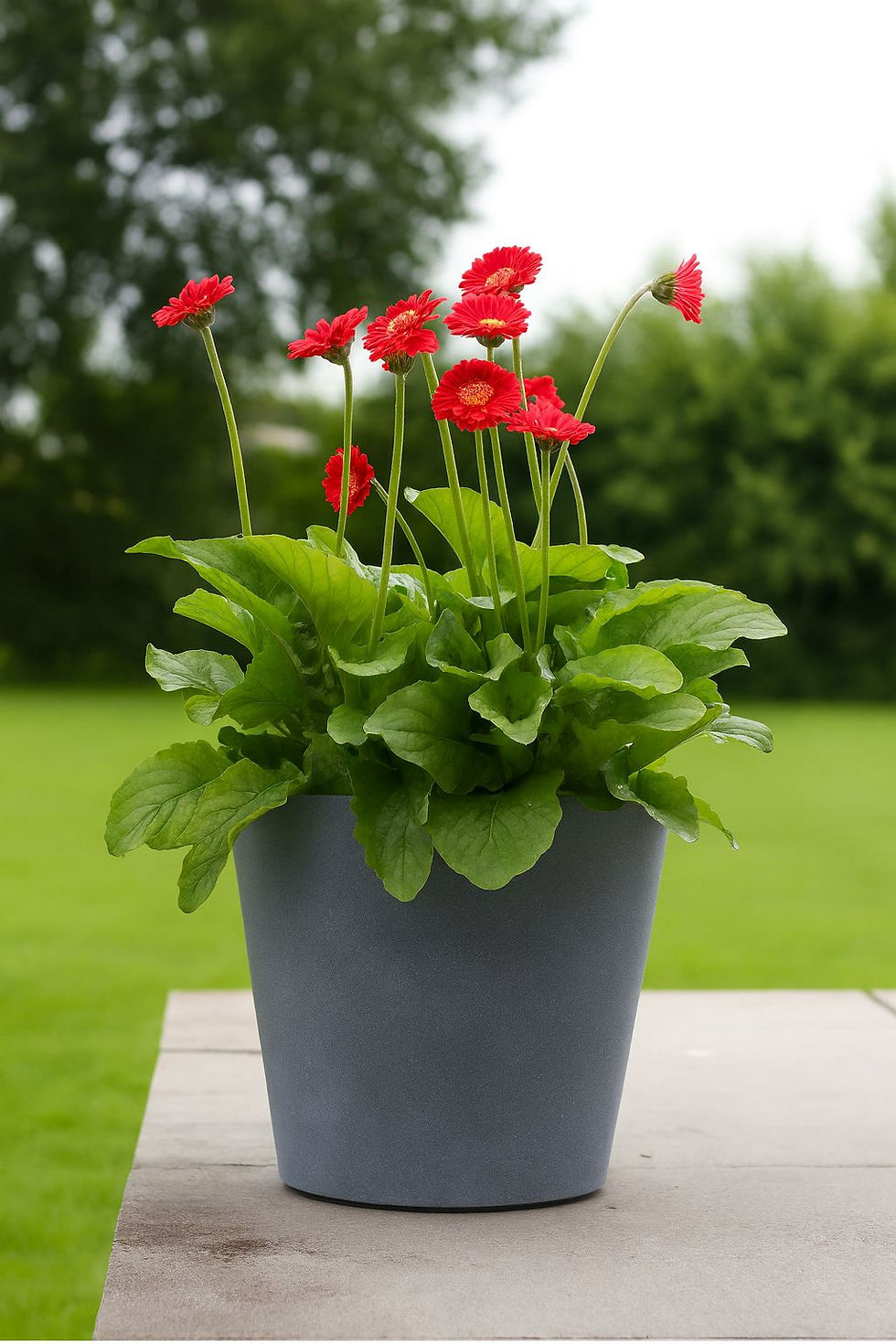
Plants communicate container needs through consistent, readable signals. Knowing what to look for prevents the growth stagnation that comes from leaving a plant too long in an undersized container.
Roots growing through drainage holes. The most visible indicator. Roots that have grown through drainage holes have exhausted available soil volume and are actively seeking more space.
Water runs straight through the pot. When roots fill a container, they displace soil and create channels for water to pass through without being absorbed. Watering becomes progressively less effective.
Soil dries out unusually fast. A dense root mass absorbs available moisture faster than normal, causing the soil to dry out much more quickly than when the plant was first potted.
Slowed or stopped growth during the growing season. If a plant that normally produces new leaves stops doing so during spring and summer, restricted roots are the primary suspect.
Yellowing leaves despite correct care. Root crowding restricts nutrient absorption. A plant receiving correct water and light but still yellowing may have exhausted nutrients in compacted, depleted soil.
Roots visible at the soil surface. When roots push up through the potting mix or appear at the top of the soil, the container is at or beyond capacity.
The plant looks top-heavy and unstable. Visual imbalance signals structural risk. A top-heavy plant in a small pot is vulnerable to tipping, which stresses the root system and risks stem damage.
Not every plant should be repotted the moment roots fill the container. |
Snake plants (Sansevieria) flower more readily when slightly root-bound; mild stress triggers blooming. |
Peace lilies, spider plants, and Boston ferns tolerate root-bound conditions and often thrive without frequent repotting. |
Orchids actively prefer tight containers; too much root space causes deterioration. |
Rule: research your specific plant before sizing up. Root-bound does not always mean unhealthy. |
Indoor vs. Outdoor Container Sizing
Indoor and outdoor plants have meaningfully different container needs. The sizing rules above apply universally, but the practical context differs in important ways.
Indoor Plants

Indoor plants typically live in smaller containers because indoor spaces are limited, and visual proportion matters. A tiny plant in a huge pot looks as wrong as a large plant in a too-small one. Weight is a real consideration for plants on shelves, in upper-floor apartments, or on balconies with structural weight limits. Extruded aluminium or lightweight resin containers are preferable in these settings over heavy ceramic or stone-composite pots.
Indoor plants also experience less evaporation than outdoor plants because they are not exposed to wind, direct sun on pot surfaces, or the drying effect of outdoor air movement. This means indoor containers dry more slowly, which reinforces the "don't overpot" rule. The same soil volume that works outdoors holds moisture significantly longer indoors.
Outdoor Plants

Outdoor containers can and generally should be larger than indoor equivalents of the same plant. Wind, direct sun on pot surfaces, and ambient air movement dramatically increase evaporation rates, especially for pots in exposed, sunny positions. A larger soil volume means a larger moisture reservoir, which reduces watering frequency in high-evaporation outdoor conditions.
For outdoor container plants in windy locations, container weight also contributes to stability. Heavy stone-composite, ceramic, or concrete planters are less likely to tip than lightweight plastic. For balconies or rooftops with structural weight concerns, lightweight HDPE resin containers offer weather durability without the weight penalty.
Choosing the Right Pot Material: Seven Options Compared
Pot material affects moisture retention, root temperature, airflow, weight, and how the container performs in different climates and growing situations. The right material for a moisture-loving tropical plant in a humid indoor room may be wrong for a succulent on a hot outdoor patio.
Material | Moisture Retention | Root Airflow | Best For | Key Trade-Off |
Terracotta / Unglazed Ceramic | Low — dries fast | Excellent | Succulents, cacti, herbs, lavender | Frost-sensitive; cracks in freeze-thaw |
Glazed Ceramic | Medium-high | Good | Tropicals, monstera, ferns, statement plants | Heavy; can crack in severe frost |
Plastic | High | None through walls | Moisture-loving plants; beginners | Overheats in direct sun; no airflow |
Stone-Composite (e.g. Vizcaya) | Medium | Good | Statement plants, palms, and ornamentals | Higher cost than plastic |
Fabric / Grow Bags | Low — dries fast | Exceptional | Vegetables, tomatoes, potatoes, herbs | Needs frequent watering; less decorative |
Self-Watering | Regulated by a reservoir | Good (upper zone) | Moisture-loving indoor plants; busy gardeners | Higher cost; not suitable for succulents |
Fiberglass | Medium | Good | Large outdoor planters | UV can degrade cheaper versions over time |
Terracotta and Unglazed Ceramic

Terracotta is porous, allowing water and air to pass slowly through the pot wall, providing excellent root airflow and causing the soil to dry faster than in non-porous containers. This makes terracotta the preferred material for plants that are sensitive to overwatering, such as cacti, succulents, lavender, rosemary, and most Mediterranean herbs. The same properties make it unsuitable for moisture-loving tropicals that dry out too quickly in terracotta.
Terracotta is frost-sensitive. Water absorbed into the porous walls expands when it freezes, cracking the pot. In freeze-prone climates, bring terracotta indoors for winter or choose a freeze-resistant alternative.
Glazed Ceramic

Glazed ceramic pots are non-porous; the glaze seals the walls and prevents moisture loss through the sides. This makes them significantly better at retaining moisture than terracotta, while still providing the weight and visual appeal of ceramic. Glazed ceramic suits a wider range of plants, including tropical foliage plants that prefer consistently moist soil. For monstera specifically, glazed ceramic is an excellent choice: it provides the stability needed as the plant becomes top-heavy, consistent moisture retention, and the visual weight that suits a statement plant.
Plastic

Plastic pots retain moisture longer than almost any other material because they are completely non-porous. They are lightweight, inexpensive, and available in every size. The limitations: they provide no root airflow, can overheat in direct outdoor sun (dark plastics absorb heat that transfers to the root zone), and are less aesthetically suited to decorative settings.
Stone-Composite (Vizcaya and Similar)

Stone-composite planters, like Austram's Vizcaya Planters, are made from a composite of 65% stone and 35% recycled plastic. This construction gives them the visual weight and textured finish of natural stone while being lightweight, freeze-resistant, and equipped with built-in drainage. For large statement plants, palms, fiddle leaf figs, mature monstera, and ornamental grasses, stone-composite planters provide stability and depth for root development without the fragility or frost vulnerability of genuine ceramic or natural stone.
Fabric Pots and Grow Bags: The Air-Pruning Advantage

Fabric pots are breathable woven containers that solve root-bound conditions in a fundamentally different way from any other pot type. When roots reach the permeable fabric wall, air exposure naturally stops their growth and forces branching, a process called air pruning. The result is a denser, more fibrous root system with far more feeder roots than a plant grown in a solid container. More feeder roots mean more efficient water and nutrient uptake.
Air pruning also eliminates the circling root problem that plastic containers create. In a plastic pot, roots that reach the wall continue growing in a circle, eventually girdling themselves and restricting the plant's long-term health. Fabric pots prevent this entirely.
The trade-off: fabric pots dry out significantly faster than solid containers because air passes through all surfaces, not just the drainage hole. This makes them demanding in watering frequency, ideal for high-moisture vegetables like tomatoes and potatoes, and less practical for plants that prefer drying between waterings. For outdoor vegetable growing, tomatoes in fabric grow bags consistently outperform the same plants in plastic containers of equivalent size.
Fabric pots are available in sizes ranging from 1-gallon herb containers to 30-gallon outdoor specimen bags. They fold flat for storage and are reusable for 3–4 seasons with basic care. UV exposure degrades the fabric over time. Choose heavy-duty, UV-resistant options for year-round outdoor use.
Self-Watering Pots for Consistent Moisture Without Constant Attention

Self-watering pots have a water reservoir built into the base, connected to the soil above by a wicking system. The plant draws moisture upward from the reservoir as the upper soil dries out, rather than relying on the gardener to water at the correct moment. When the reservoir is empty, it is refilled through an external port. The result is more consistent soil moisture and significantly less risk of both underwatering and overwatering.
Self-watering pots are best suited for moisture-loving plants, peace lilies, ferns, herbs, leafy vegetables, and most tropical foliage plants. They are not suitable for succulents, cacti, or other drought-tolerant plants that need their soil to dry out completely between waterings, as the constant reservoir keeps the lower soil zone perpetually moist.
The primary trade-off is cost: self-watering containers cost 3–6 times more than equivalent standard pots. For gardeners who travel frequently, work long hours, or consistently struggle with watering consistency, this premium is often the best investment in plant health available.
Potting Mix: The Soil Inside the Pot Matters as Much as the Pot
Choosing the right pot size and material means nothing if the growing medium inside it is wrong. Garden soil is unsuitable for container growing. It compacts under repeated watering in an enclosed space, blocks air movement around roots, and drains poorly. Always use a purpose-formulated container potting mix.
What Makes a Good Container Potting Mix
A quality container potting mix does three things simultaneously: retains enough moisture for roots to access between waterings, drains excess moisture quickly to prevent waterlogging, and maintains air pockets around the root zone for oxygen access. These three properties need to be in balance, a mix that is too moisture-retentive drowns roots; one that is too free-draining dries out before roots can absorb adequate water.
The baseline ratio used across commercial horticulture for most container plants is 60% peat or coconut coir (moisture retention), 30% compost (nutrients and biological activity), 10% perlite or coarse sand (drainage and aeration). This provides the right balance for most tropical foliage plants, flowering annuals, and general-purpose container gardening.
Plant Type | Potting Mix Adjustment | Why |
Succulents/cacti | Increase perlite to 30–50% | These plants need soil that dries completely between waterings. Standard mixes retain too much moisture. |
Tomatoes / fruiting veg | Add extra compost (up to 40%) | Heavy feeders that deplete nutrients fast; a richer mix extends the time between fertilising. |
Orchids | Bark-based mix, not standard potting mix | Orchid roots need extreme airflow; standard potting mix suffocates them. |
Ferns / moisture-lovers | Add coir, reduce perlite | These plants prefer more consistent moisture; less drainage amendment prevents rapid drying. |
General tropicals | Standard mix (60/30/10) | The baseline ratio suits most indoor foliage plants without adjustment. |
Potting mix depletes over time. Nutrients are consumed by the plant and leached out through repeated watering. For long-term container plants, fertilise every 2–4 weeks during the active growing season, and plan to refresh the top layer of soil (topdressing) or fully repot every 1–2 years, depending on plant type and growth rate.
The Drainage Rock Myth: Why It Hurts Your Plants
One of the most widely practised container gardening habits is placing a layer of gravel, rocks, or broken pottery at the bottom of a pot before adding soil. The reasoning seems sound: coarser material at the base should help water drain away from roots faster.
It doesn't. The University of Illinois Extension, Washington State University horticultural researchers, and multiple peer-reviewed studies on container soil physics have confirmed that rocks at the bottom of pots make drainage worse, not better.
Here is what actually happens. When water moves down through a pot, it encounters an abrupt boundary between two materials with different particle sizes: fine soil above, coarse gravel below. Water is slow to cross this interface due to capillary tension. Instead of draining freely into the gravel, water perches in the soil just above the gravel layer, accumulating until the soil is fully saturated. Only then does excess water begin to move into the gravel below. The gravel layer raises the perched water table into the root zone, precisely where you do not want sustained moisture.
The gravel layer also reduces the total soil volume available to roots and adds unnecessary weight.
Use a purpose-formulated container potting mix, not garden soil. |
For succulents and cacti: amend the potting mix with perlite or coarse sand throughout, not just at the base. |
To stop soil from falling through large drainage holes, cover the hole with a square of window screen, landscape fabric, or a coffee filter. |
For added stability in windy conditions, place a brick or flat stone under the pot, not inside it. |
Source: University of Illinois Extension, Successful Container Gardens. |
Common Mistakes When Choosing Plant Pots
Going Too Large Too Fast
Moving a plant directly from a 4-inch pot to a 12-inch pot leaves a disproportionate amount of soil surrounding the root ball. That excess soil holds moisture that the roots cannot absorb quickly enough, creating sustained wet conditions that cause root rot. The correct approach is one size at a time, and only when the plant has genuinely grown into its current container.
Ignoring Drainage Holes
A pot without drainage holes is a pot that will eventually waterlog. Even drought-tolerant plants will develop root rot in standing water given enough time. When using decorative cachepots or outer containers without drainage, always keep the plant in a nursery pot with holes inside the decorative container. Empty the decorative container of accumulated water after every watering session.
Adding Gravel to the Bottom for Drainage
Covered in detail in the section above. This widespread practice raises the perched water table into the root zone rather than improving drainage. Use the right potting mix and a functioning drainage hole instead.
Using Garden Soil in Containers
Garden soil compacts in the enclosed space of a pot, blocking air movement around roots and causing poor drainage regardless of the pot material. Use a purpose-formulated container potting mix. For vegetables and heavy feeders, amend with additional compost.
Repotting Too Frequently
Repotting is a significant event for a plant's root system. Moving a plant before it has grown into its current container stresses the roots, interrupts the growth cycle, and can set the plant back several weeks. Most indoor plants need repotting every 12–24 months. Observe the signs in the previous section rather than relying on a fixed calendar.
Repotting at the Wrong Time of Year
Spring is the optimal repotting window for most plants; they are entering their active growth phase, which gives them the best recovery conditions after root disturbance. Repotting in late autumn or winter, when many plants are dormant, slows recovery and extends the stress period. Emergency repotting (for a severely root-bound or diseased plant) can happen any time, but spring is the default timing for planned moves.
When You Don't Need to Repot: Topdressing as an Alternative

Not every plant that looks tired in its container needs full repotting. For slow-growing plants or plants whose soil has become depleted but whose roots have not yet outgrown the container, topdressing is a lower-stress alternative.
Topdressing means removing the top 2–3 inches of old potting mix and replacing it with fresh soil. This restores the nutrient content of the upper root zone, improves surface drainage, and refreshes the appearance of the pot without the shock of full repotting. It is particularly effective for large container plants that are difficult to repot, and for slow-growing species that would not benefit from the disruption.
Use topdressing when the plant is growing at a normal rate and roots are not visible at drainage holes or the soil surface, but the soil has hardened, the level has dropped significantly, or the plant is showing early nutrient deficiency signs. Signs that topdressing is not enough: roots at drainage holes, rapid soil drying, or stopped growth during the growing season. These indicate full repotting is needed.
How to Repot Correctly: Step by Step
1. Water the plant thoroughly 24 hours before repotting. Moist soil holds together better and causes less root disturbance when the plant is removed.
2. Prepare the new container with a small layer of fresh potting mix at the base, enough to position the plant so its crown sits slightly below the rim of the new pot.
3. Remove the plant from its current container carefully. If it resists, run a thin blade around the inside edge to loosen compacted soil. Tip the pot and support the plant as it slides out.
4. Inspect and loosen the root ball. Gently tease the outer roots loose, particularly if they have been circling inside the pot. This encourages outward root growth into the new soil.
5. Remove any dead, mushy, or visibly rotted roots with clean scissors before placing the plant in the new container.
6. Place the plant and fill in around it with fresh potting mix, pressing gently to eliminate air pockets. Do not compact the soil; roots need airflow.
7. Water thoroughly until water runs from the drainage holes, then allow the pot to drain completely before returning it to its growing position.
Repotting Aftercare: The First Seven Days
For the first three to seven days after repotting, place the plant in a shaded or partially shaded position, even if it normally grows in full sun. Disturbed roots are more sensitive to additional stresses. Resume normal light conditions once the plant shows signs of new growth or has stabilised without wilting.
Do not fertilise immediately after repotting. Fresh potting mix contains sufficient nutrients for 4–6 weeks. Fertilising a stressed root system risks root burn. Resume feeding after the first month.
Some wilting in the days after repotting is normal. Roots need time to re-establish contact with new soil and resume full water uptake. Unless wilting is severe and persistent, give the plant time rather than immediately overwatering.
What Are Vizcaya Planters and What Should You Plant in Them?

Vizcaya Planters are decorative garden containers from Austram designed for indoor and outdoor use year-round. Made from a composite of 65% stone and 35% recycled plastic, they carry the visual weight and textured finish of natural stone while being lightweight, freeze-resistant, and built with drainage.
The stone content gives Vizcaya Planters the stability and aesthetic weight that suits large statement plants; they do not tip or shift the way lightweight plastic containers do with mature, top-heavy plants. The recycled plastic component provides freeze resistance that genuine stone and terracotta cannot match, making them suitable for outdoor use in climates with hard winters.
Plant | Why It Works in a Vizcaya Planter |
Monstera | Top-heavy as it matures, the stability and depth of the Vizcaya prevent tipping |
Palms | Deep root systems benefit from container depth; a stable base is essential |
Fiddle Leaf Fig | Large foliage, vertical growth needs an anchored, proportional container |
Ornamental Grasses | Broad root spread benefits from wide proportions; it drains freely |
Ferns | Stone-composite moisture balance suits consistent moisture needs |
Flowering Shrubs | Statement outdoor planting; freeze resistance supports year-round use |
Pot size rules apply fully to Vizcaya Planters. A premium container that is too large for a plant creates the same overwatering risk as any oversized pot. Size the Vizcaya Planter to match the plant's current root system, not its eventual mature size.
What Is the Difference Between Pots and Planters?
Pots are functional growing containers designed primarily for plant health, typically including drainage holes, sized for individual plants, and practical rather than purely decorative. When learning how to choose the correct pot size for a growing plant, starting with a standard nursery pot is usually the right move.
Planters are larger containers that combine growing function with significant decorative impact, used as landscape or patio features, chosen as much for visual contribution as growing capacity.
Many gardeners combine both: a functional nursery pot inside a decorative cachepot or planter. This provides the drainage of a purpose-built grower pot and the visual appeal of a decorative planter. Always empty accumulated water from the outer container after watering.
How Often Should You Repot Growing Plants?
Repotting frequency should be driven by the plant's actual root development, not a fixed schedule. These are starting points; let the plant's signals guide the timing.
Plant Type | Typical Frequency | Key Indicator |
Fast-growing tropicals (monstera, pothos, philodendron) | Every 12 months | Roots at drainage holes or the soil surface |
Medium growers (peace lily, ferns, most foliage plants) | Every 18–24 months | Slowed growth during the active season |
Slow growers (succulents, cacti, snake plant) | Every 2–3 years | Visible root overcrowding only |
Vegetables (tomatoes, peppers) | Annually or as needed | End of season; start fresh each year with new soil |
Root-bound tolerant (orchids, snake plant) | Only when essential | Structural failure of the potnot plant behaviour |
Frequently Asked Questions
What are the most common mistakes when choosing plant pots?
The most common: going too large too fast (excess soil holds moisture roots cannot absorb, causing root rot); using pots without drainage holes; adding gravel to the base, thinking it improves drainage (it raises the perched water table and makes waterlogging more likely, not less); and using garden soil in containers instead of purpose-formulated potting mix.
Repotting too frequently before a plant has grown into its current container is also a significant and underacknowledged mistake. Root disturbance sets plants back and interrupts growth cycles. Observe the plant's signals rather than repotting on a fixed schedule.
What is the difference between pots and planters?
Pots are functional growing containers with drainage holes, practical sizing, and simple design intended primarily for plant health. Planters are larger decorative containers that combine growing function with visual impact, often used as landscape or patio features. Many gardeners use them together: a functional nursery pot inside a decorative cachepot. Always empty the water that accumulates in the outer planter after watering.
Do plants grow better in plastic or ceramic pots?
Both support healthy plant growth, but each suits different plants. Plastic retains moisture longer (fully non-porous), suitable for moisture-loving plants or beginners who may underwater. Glazed ceramic provides better root airflow and stable temperatures suited to tropical foliage plants. Unglazed terracotta dries fastest, making it the preferred choice for succulents, cacti, and herbs that prefer drier conditions between waterings.
For outdoor use, stone-composite planters like Vizcaya provide a fourth option: the visual weight of ceramic with freeze resistance and lighter handling. Material choice should follow the plant's moisture preference and the climate where the pot will live.
What are fabric pots, and are they better than plastic pots for growing plants?
Fabric pots are breathable woven containers that air-prune roots. When roots reach the permeable fabric wall, air exposure naturally stops their growth and forces branching, creating a denser, more fibrous root system than solid containers produce. This eliminates root-circling (the root-bound problem common with plastic pots) and significantly improves water and nutrient uptake efficiency.
For vegetable growing, especially tomatoes, potatoes, and peppers, fabric pots consistently outperform plastic containers of equivalent size. The trade-off: fabric pots dry out much faster due to airflow through all walls, so they require more frequent watering. They are less decorative and less suitable for plants that prefer drier conditions. For high-moisture vegetable growing outdoors, fabric is the highest-performing container option.
What are self-watering pots, and when should I use one?
Self-watering pots have a water reservoir built into the base connected to the soil by a wicking system. The plant draws moisture upward as the upper soil dries, rather than relying on manual watering at the correct moment. The result is more consistent soil moisture and less risk of both underwatering and overwatering.
They are best suited for moisture-loving plants, peace lilies, ferns, herbs, leafy vegetables, and for gardeners who travel, work long hours, or struggle with consistent watering. They are not suitable for succulents, cacti, or drought-tolerant plants that need to dry out completely between waterings. Cost is 3–6 times higher than equivalent standard pots, which is the primary trade-off
What should I use instead of gravel at the bottom of a pot?
Nothing. The bottom of a pot should contain only potting soil. Rocks or gravel at the base do not improve drainage; they raise the perched water table into the root zone and make waterlogging more likely. This has been confirmed by the University of Illinois Extension and Washington State University horticultural research.
To stop soil from falling through large drainage holes, use a small piece of window screen, landscape fabric, or a coffee filter over the hole before adding soil. To improve drainage throughout the pot, amend the potting mix with perlite or coarse sand rather than adding a gravel layer at the base.
Are ceramic pots good for Monstera?
Yes. Glazed ceramic pots suit monstera well for two reasons: weight and moisture balance. Monstera grows quickly, produces large leaves, and becomes top-heavy. A lightweight plastic container becomes unstable before the plant reaches full size. The glazed ceramic's weight anchors the plant. Glazed ceramic also retains moisture better than terracotta, which suits monstera's preference for consistently moist (but not waterlogged) soil.
Drainage holes are essential. Monstera roots are sensitive to waterlogging. Always choose glazed ceramic pots with proper drainage, and never leave monstera sitting in pooled water in a saucer.
What are Vizcaya Planters?
Vizcaya Planters are decorative garden containers from Austram, made from a composite of 65% stone and 35% recycled plastic. This gives them the visual weight and textured finish of natural stone while being lightweight, freeze-resistant, and equipped with built-in drainage for both indoor and outdoor use year-round.
Best suited for large statement plants: monstera, palms, fiddle leaf figs, ornamental grasses, where visual impact and container stability both matter. Standard pot sizing rules apply: choose a Vizcaya Planter sized to match the plant's current root system, not its eventual mature size.
What is topdressing, and when should I use it instead of repotting?
Topdressing is replacing the top 2–3 inches of old potting mix with fresh soil without disturbing the root ball or moving the plant to a new container. It refreshes nutrient content, improves surface drainage, and restores the appearance of the potting mix without the stress of full repotting.
Use topdressing when the plant is growing normally, and roots are not yet visible at drainage holes or the soil surface, but the soil has dropped, hardened, or become depleted. It is particularly useful for large plants that are difficult to repot and slow-growing species that do not need full repotting annually.
When is the best time of year to repot plants?
Spring is the best repotting window for most plants. As plants enter their active growth phase, they recover from root disturbance faster and establish more quickly in new soil. Repotting during late autumn or winter, when many plants are dormant, slows recovery significantly and can delay growth into the following season. For emergency repotting (severely root-bound plants, root rot, structural failure), timing is less important than acting promptly.
Succulents / cacti / herbs that prefer dry conditions → Terracotta or unglazed ceramic |
Tropical foliage (monstera, pothos, ferns) → Glazed ceramic or stone-composite |
Beginners or moisture-loving plants → Plastic or self-watering pot |
Vegetable growing outdoors (tomatoes, potatoes) → Fabric grow bag (10–20 gallon) |
Gardeners who travel or water inconsistently → Self-watering pot |
Large decorative statement outdoors → Stone-composite (Vizcaya) or heavyweight ceramic |
Balcony/rooftop with weight limits → Lightweight plastic, HDPE resin, or fabric |
All climates, freeze-resistant, low maintenance → Stone-composite (Vizcaya) |
Vizcaya Planters: 65% stone, 35% recycled plastic — freeze-resistant, lightweight, built-in drainage. |
Suitable for residential, commercial, and hospitality outdoor environments. |
Available through authorised wholesale distributors nationwide. |


Comments