
Top Garden Trends 2026: What's Shaping Outdoor Spaces This Year
Updated: Aug 20

The top garden trends for 2026 center on one clear shift: gardens that are wilder, more purposeful, and more personal than anything in recent memory. Think pollinator-packed borders, rewilded backyards, AI-assisted planting plans, and kitchen plots designed to be as beautiful as they are productive. Surveys from Monrovia and Alan's Factory Outlet, drawing on data from over a million homeowners, confirm that 77% of Americans are planning a backyard upgrade in 2026.
The top garden trends for 2026 center on one clear shift: gardens that are wilder, more purposeful, and more personal than anything in recent memory. Think pollinator-packed borders, rewilded backyards, AI-assisted planting plans, and kitchen plots designed to be as beautiful as they are productive. Surveys from Monrovia and Alan's Factory Outlet, drawing on data from over a million homeowners, confirm that 77% of Americans are planning a backyard upgrade in 2026.
From Austram's position as a garden product manufacturer with over 5,000 dealer relationships nationwide, we've had a front-row seat to how these movements translate into real purchasing decisions. What designers are sketching, retailers are stocking, and growers are producing tells a more accurate story than any trend report alone. Here's what's actually happening and what it means for your outdoor space in 2026.
Why 2026 Is a Turning Point for Garden Design
Something has shifted in how people relate to their gardens. The pandemic pushed more people outdoors, and that intimacy never left. Gardens are no longer decorative backdrops; they're extensions of living space, personal identity, and environmental values all at once. Half of American homeowners now say their backyard is "very" or "extremely" important to their mental health, according to a 2026 survey by Alan's Factory Outlet.
The thread running through every major trend this year is authenticity. Gardens that mean something. Spaces that give back to wildlife, to wellbeing, to the kitchen table. Planting that's rich, layered, and a little unpredictable. Whatever direction you're heading this season, that's the current you're working with.
The Top Garden Trends of 2026
1. Chaos Gardening: Controlled Wildness Done Right

Chaos gardening has moved well beyond its social media moment. What started as a low-effort seed-scattering trend has evolved into a legitimate design philosophy, one that draws on naturalistic planting traditions while embracing unpredictability as a feature, not a flaw.
The idea is simple: scatter a diverse mix of seeds (often wildflowers, annuals, and self-seeding perennials) and let them establish their own hierarchy. What grows, grows. What doesn't make it gets replaced the following season naturally. The results, when done thoughtfully, are genuinely beautiful, dense, layered, textured plantings that look effortless but reward close attention. More importantly, chaos gardens support biodiversity in ways that manicured borders rarely can.
Practical tips for chaos gardening:
• Start with a seed mix that suits your climate and soil type. Regional wildflower mixes outperform generic blends
• Prepare the ground well; chaos doesn't mean skipping the groundwork
• Include a mix of heights: low groundcovers, mid-height bloomers, and tall statement plants
• Resist the urge to tidy too soon, let plants set seed before cutting back
The choice of growing media matters more than most people expect in chaos gardening. Loose, well-draining soil or a quality coco fiber liner in raised beds gives seeds the best possible start before they're left to do their own thing. Austram's ProGro coco fiber liners retain moisture and support root development without compaction, exactly the conditions that give self-seeded plants the best chance to establish.
2. Pollinator Gardens: From Trend to Necessity

Pollinator gardens have been climbing in popularity for several years, but in 2026, they've crossed from "nice to have" into a genuine mainstream design priority. Raised garden beds are a natural vehicle for structured pollinator planting, now registering 1.16 million Google searches annually, making them the single highest-volume search trend in outdoor gardening, according to a 2026 analysis of homeowner search behavior.
The urgency behind pollinator gardens is real. North American bee populations have declined significantly over the past two decades, with managed honeybee colonies experiencing annual losses that have prompted federal concern. Gardeners are responding. A well-designed pollinator garden doesn't look like an afterthought; it's structured, layered, and blooms across multiple seasons. Think Agastache, echinacea, salvia, native grasses, and late-season sedum: plants with purpose that also happen to be visually compelling.
For retailers and growers, pollinator-focused ranges are consistently strong sellers. Customers aren't just buying plants; they're buying into responsible stewardship. The story behind the product matters as much as the product itself.
3. Rewilding Your Backyard: Nature as the Brief

Rewilding goes a step further than chaos gardening or pollinator planting. It's about actively stepping back and inviting natural processes to re-establish themselves, removing the lawn entirely, planting native species that attract birds and insects, introducing log piles and water features, or simply mowing less. The Pennsylvania Horticultural Society (PHS) specifically named rewilding as one of its top 2026 gardening trends, noting that it "reflects how gardeners are experimenting, learning, and finding joy in every corner of their gardens."
The design challenge and the opportunity are making rewilded spaces feel intentional rather than neglected. The difference lies in structure. A rewilded garden still benefits from considered paths, clear edges, and focal points. Without those anchors, even the most ecologically rich space can read as abandoned rather than purposeful.
Water scarcity is no longer a regional concern. Drought-tolerant landscape requests are up 30% according to Yardzen, which draws on data from over a million users across the US. Requests for gravel and permeable surfaces are up 6% from the same source, while concrete use in outdoor projects has declined 13% as homeowners shift toward groundwater-friendly hardscaping.
5. Garden Maximalism and Container Gardening: More Is More (When It's Done Well)
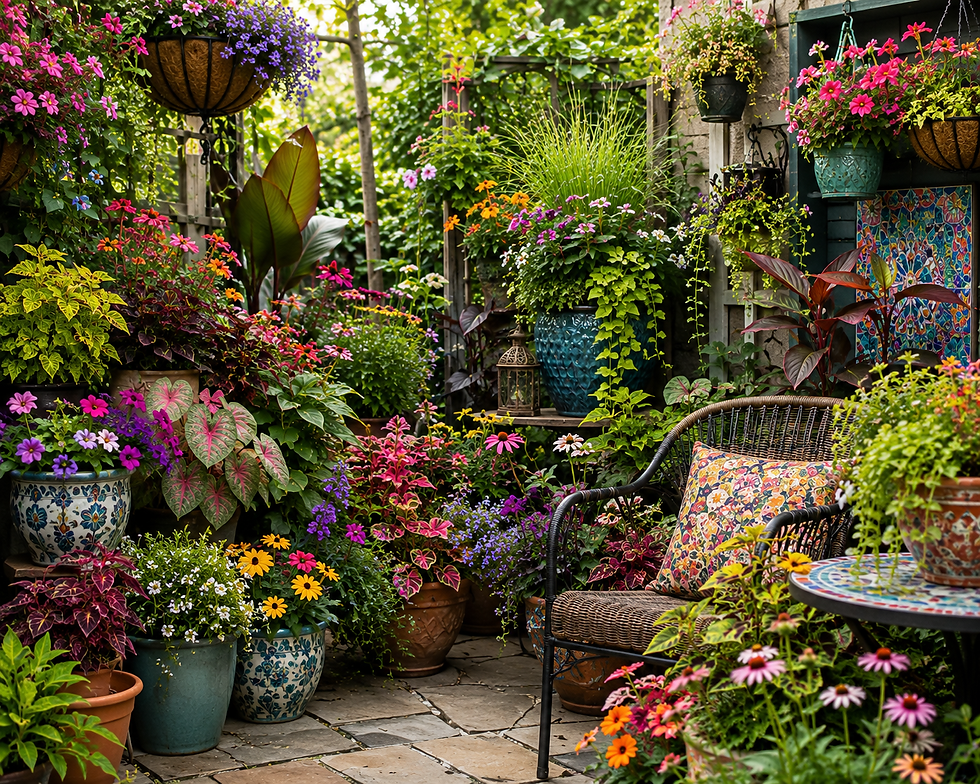
Maximalism is the direct counter-movement to the controlled, minimal gardens that dominated the 2010s, and it has landed hard. Dense planting, mixed textures, bold color combinations, layered borders that spill and drape and climb. This aesthetic is driving much of the excitement in garden design right now. The reference points are varied: cottage garden traditions, tropical exuberance, and the bold jewel-toned palettes of contemporary garden design.
Closely related and growing even faster is container gardening. Monrovia's survey of over 1,400 homeowners found the biggest increase in container gardening interest among the 65+ demographicbut this is a trend reaching every demographic. "They are creating whole gardens on their patios with beautiful containers," said Katie Tamony, Chief Marketing Officer at Monrovia. Homeowners are using planters, urns, window boxes, and hanging baskets to soften hardscape, add color and fragrance, and create complete outdoor living spaces on decks and patios of any size.
The key distinction between maximalism and mess is intention. A maximalist garden, whether in the ground or in containers, still has a spine: a considered structure, a dominant color story, and a logic to the layering. It's an abundance with a point of view.
For container displays and hanging basket installations, the right liner makes a visible difference. Austram's garden range, including ProGro coco fiber liners, hanging baskets, planters, and trough planters, is designed to support lush, multi-plant displays across extended seasons, exactly what maximalist container styling demands.
6. The Aesthetic Kitchen Garden: Growing Food Beautifully

The kitchen garden has had a full image overhaul. What used to be a purely functional patch often tucked out of sight has moved front and center in contemporary garden design. Edible gardening is now the top stated goal across all age groups in Monrovia's homeowner survey, and raised garden beds are the single most-searched outdoor trend in 2026 at 1.16 million annual searches.
In 2026, the edible garden is expected to be as beautiful as any ornamental border. This means raised beds that are themselves design statements, architectural support structures for climbers (painted metal obelisks, woven willow arches), and planting combinations that mix heirloom tomatoes, bronze fennel, climbing nasturtiums, and Swiss chard in genuinely gorgeous ways. The driving forces are equal parts aesthetic and practical. Rising food costs have made home growing more financially appealing, but gardeners don't want a compromise.
What makes an aesthetic kitchen garden work:
• Choose crops with ornamental qualities: rainbow chard, purple basil, climbing beans with multi-colored pods, espalier fruit trees
• Use raised beds as design elements with quality materials and consistent proportions
• Add height with vertical structures, such as arches, obelisks, netting frames, and tepees
• Interplant with flowers like nasturtiums, calendula, and borage for both beauty and pest management
• Include microgreens, edible flowers, and citrus or fig trees for crops beyond traditional vegetables
7. Indoor Growing and Grow Lights: Year-Round Cultivation
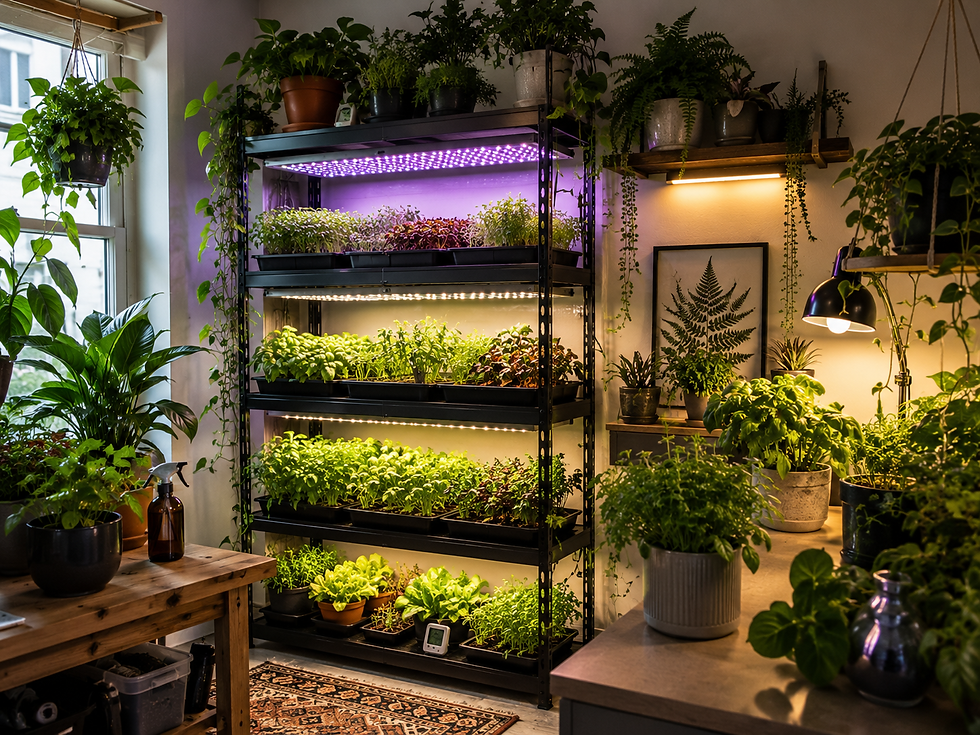
Indoor growing has moved from a niche hobby to a mainstream practice. The global LED grow light market was valued at $4.67 billion in 2025 and is projected to reach $5.29 billion in 2026, growing at a compound annual rate of 13.14%, according to Market Data Forecast. That growth curve reflects a genuine shift in consumer behavior: LED grow lights are now energy-efficient enough to be cost-effective for home use, and the range of what can be successfully grown indoors has expanded well beyond herbs and microgreens.
The PHS named indoor growing and houseplant displays as a distinct 2026 trend, noting that "innovative houseplant displays" are reshaping how people interact with plants in interior spaces. Tomatoes, chilies, leafy greens, and even some fruiting plants can thrive under quality LED lighting. Full-spectrum grow lights make genuinely viable year-round growing possible in any climate and any living space.
For retailers, indoor growing represents a genuine year-round revenue stream, one that's not weather-dependent and appeals to a growing urban demographic. For home gardeners, it removes one of the most persistent limitations of gardening: the calendar.
8. Mindful, Wellness, and Experiential Garden Design

Two related but distinct expressions of this have emerged as named trends in 2026. The first is mindful gardening, creating spaces that invite slowness: a scented herb garden you walk through, a water feature that draws the ear, seating positioned to face the most beautiful view, plantings that change meaningfully across seasons. The second is experiential landscape design, named by Todd Haiman of Todd Haiman Landscape Design and Shauna Moore, interim vice president of horticulture at Brooklyn Botanic Garden, as a defining 2026 movement.
Experiential landscapes go beyond how a garden looks to how it feels across all five senses. The design methodology deliberately incorporates scent (plantings of lavender, rosemary, night-blooming jasmine, and old roses), sound (water features, ornamental grasses that move in the wind, wildlife habitats that attract birdsong), texture (paths through tall grasses, moss-covered stone, rough-cut timber), and taste (edible elements woven into ornamental planting). The goal, as Haiman and Moore describe it, is a garden that feels "as styled as a living room" while remaining deeply connected to the natural world.
This trend is influencing commercial spaces significantly. Healthcare facilities, schools, and workplace campuses are investing in therapeutic and experiential garden designs in ways they simply weren't a few years ago. The wellness garden, designed to engage, restore, and connect, is no longer a luxury add-on. It's becoming a standard expectation of thoughtfully designed outdoor spaces.
9. Plant Collecting: The Hobby That's Become a Movement

Plant collecting is making a significant comeback in 2026, and it's arriving with a new demographic. "Collecting is making a comeback, especially with Gen Z and Millennials," says Katie Dubow, president of the Garden Media Group, which released its official Garden Trends Report for 2026. The Garden Media Group is the most widely cited trend authority in the US horticulture industry, producing the annual report that garden centers, growers, and manufacturers use to plan buying and merchandising decisions.
What's driving the collecting trend is a shift in how younger gardeners relate to plants, not as background decoration but as objects of genuine interest, conversation, and community. Rare cultivars with unusual variegation (the marbled leaves of Monstera albo, the striped foliage of new hostas), newly introduced color variations of classic genera, and limited-edition releases from specialty nurseries are all fueling a collector mentality that has more in common with sneaker culture or vinyl records than traditional gardening.
The crossover with container gardening is direct. Collector plants are often showcase specimens, a single statement plant in a quality planter, positioned deliberately, rather than massed in borders. Austram's Vizcaya planters and decorative container range suit this display style exactly: a premium container for a premium plant, designed to be noticed.
10. Heirloom and Purpose-Driven Planting

Gardening with intention is one of the defining characteristics of 2026. People are choosing plants not just for how they look but for what they represent: a connection to regional heritage, a commitment to biodiversity, or the particular joy of growing a variety that isn't available in any supermarket. The story behind a plant now matters in a way it didn't a decade ago.
Heirloom vegetables, heritage roses, and locally native wildflowers are all benefiting from this shift. The PHS highlighted home fruit growing as a specific 2026 trend, noting rising interest in native and heritage varieties like the pawpaw (Asimina triloba) in the South, serviceberries in the mid-Atlantic, and community orchard projects across urban areas. Purpose-driven planting also encompasses growing for cut flowers, making natural dyes, supporting specific pollinators, or cultivating medicinal herbs.
The garden as a single-function space is becoming less common. The garden, as a productive, multifaceted ecosystem, is the clear direction of travel in 2026.
11. AI-Powered Garden Design: Planning Smarter

Artificial intelligence has arrived in the garden. The Pennsylvania Horticultural Society specifically named AI-powered garden design as one of its top 2026 trends, with Andrew Bunting, Vice President of Horticulture at PHS, noting that "cutting-edge AI tools" are reshaping how gardeners approach their spaces. "AI-powered tools are helping gardeners visualize layouts and plant placement before they dig in," PHS stated in its official 2026 trend release.
In practice, this means smartphone apps that identify plants from photographs, AI garden-planning tools that generate planting plans based on your garden's dimensions, soil type, and climate zone, and design software that lets you visualize mature plantings before anything is purchased. For beginners, AI tools reduce the intimidation factor significantly. They make expert-level guidance accessible to anyone with a smartphone. For experienced gardeners, they function as a fast-iteration design partner.
For retailers, AI-driven garden planning tools represent a new customer education channel. Gardeners who use planning apps before visiting a garden center arrive with more specific intentions and purchase more deliberately. The tools are driving interest, not replacing it.
12. Sustainable Composting: Closing the Loop on Garden Waste

Composting has always been a good practice. In 2026, it has become central to how sustainability-conscious gardeners think about their growing systems, and the methods have diversified significantly beyond the basic backyard heap.
Hot composting: The traditional approach, accelerated. A well-managed hot compost pile reaches 130–160°F, killing weed seeds and pathogens while producing finished compost in as little as four to eight weeks. Requires turning and monitoring but delivers the fastest results.
Bokashi systems: An anaerobic fermentation method using inoculated bran to break down all food waste, including meat, dairy, and citrus, in a sealed container. Produces a fermented pre-compost that activates quickly when buried in soil.
Worm farms (vermicomposting): Red worms process kitchen scraps into nutrient-dense worm castings, one of the most biologically active soil amendments available. Suitable for indoor use in small spaces, and produces liquid fertilizer as a byproduct.
Community composting: Growing networks of neighborhood and municipal composting programs are making it possible for gardeners without space for on-site systems to participate in the closed loop. What all composting methods share is an understanding that healthy soil is the foundation of everything else: the lush borders, the productive kitchen garden, the thriving wildlife habitat. For manufacturers and retailers, interest in composting aligns with broader demand for sustainable garden inputs, such as peat-free composts, organic feeds, and growing media with genuinely low environmental footprints.
Common Mistakes to Avoid in 2026 Gardens
Chasing trends without understanding your site. Gravel gardening sounds appealing, but it won't work in cold, heavy clay soil without serious ground preparation. Always start with what your site actually supports.
Confusing maximalism with clutter. More plants aren't the same as better planting. Maximalism needs a structural logic to avoid looking chaotic.
Neglecting soil health. No plant will thrive in poor growing media, no matter how on-trend the variety. Investing in quality compost, soil improvers, and appropriate container liners is never wasted.
Ignoring maintenance needs. Chaos gardens are lower maintenance than traditional borders, but they're not no-maintenance. Understanding what each planting style actually requires will save frustration.
Buying trendy plants without checking provenance. Heirloom and heritage varieties are worth seeking from reputable suppliers. Mass-produced "heritage" labeling doesn't always mean what it implies.
Over-relying on AI garden planning without ground-truthing. AI design tools are excellent for visualization and plant discovery, but they don't know your specific microclimate, soil type, or existing plant relationships. Use them as a starting point, not a final answer.
How to Choose the Right Garden Style for 2026
The right approach depends on three things: your site conditions, your available time, and what you actually want from your garden. Most successful gardens in 2026 blend more than one direction.
If you want... | Consider... | Time commitment |
Low maintenance + ecology | Rewilding or chaos gardening | Low once established |
Beauty + food production | Aesthetic kitchen garden | Medium-high |
Water-wise planting | Gravel/xeriscape design | Low once established |
Bold visual impact | Maximalist planting or containers | Medium |
Year-round growing | Indoor growing with grow lights | Low-medium |
Connection and calm | Wellness / experiential garden design | Low-medium |
AI-assisted planning | AI garden tools, then plant | Low to start |
Heritage and biodiversity | Heirloom and purpose-driven planting | Medium |
Statement plants + display | Plant collecting with premium containers | Low-medium |
Multi-sensory design | Experiential landscape approach | Medium |
A rewilded meadow section can sit alongside a beautifully structured kitchen garden. A maximalist container display can be filled predominantly with pollinator plants. The best gardens in 2026 aren't single-trend spaces; they're thoughtfully layered environments.
For professional landscapers and commercial growers sourcing at scale, Austram's wholesale garden products support a wide range of these growing styles with reliable, trade-quality supplies:
Frequently Asked Questions
What are the top garden trends for 2026?
The dominant garden trends for 2026 include chaos gardening, pollinator-focused planting, garden rewilding, gravel and xeriscape design, garden maximalism and container gardening, aesthetic kitchen gardens, indoor growing with LED grow lights, mindful and experiential garden design, plant collecting, heirloom planting, AI-powered garden design, and sustainable composting. The overarching theme, confirmed by Monrovia, PHS, and Yardzen across surveys of over a million homeowners, is gardens that are ecologically purposeful, personally meaningful, and genuinely beautiful.
77% of American homeowners are planning a backyard upgrade in 2026, with raised garden beds registering 1.16 million annual searches, the single highest-volume gardening search trend of the year.
What are the outdated backyard trends for 2026?
Several once-popular approaches are fading fast. Perfectly manicured, monoculture lawns are out of step with ecological values. Overly minimalist, sparse-planting gardens feel cold and uninspiring against the current taste for abundance. Artificial grass continues to fall out of favor as its environmental costs become better understood. Pampas grass, which had a strong moment in the early 2020s, is now widely seen as overdone. And the all-grey hardscape palette, grey decking, grey rendered walls, grey paving- is giving way to warmer, earthier tones.
What style is coming back in 2026?
The cottage garden tradition is experiencing a genuine revival, but updated. Dense, informal planting, climbing roses, heritage perennials, and scented flowers are all back, combined with a more contemporary understanding of ecology and a bolder color sensibility. Monrovia calls this the "Sunday Garden" aesthetic, a quiet luxury approach that incorporates boxwood, climbing roses, lavender, and hydrangea in cohesive, romantic compositions. 38% of homeowners surveyed by Monrovia say the garden is where they can "just be," making this restorative aesthetic one of the most commercially significant trends of the year.
What are the color trends for gardens in 2026?
Two distinct palette directions are emerging in 2026, reflecting the year's two dominant design aesthetics. For maximalist and bold planting schemes, rich jewel tones dominate: deep burgundy, plum, copper, amber, and forest green, appearing in dark-foliaged heucheras, inky salvias, burnished grasses, and statement containers. This palette feels warm, complex, and earthy. For the quieter, more romantic garden aesthetic, the "Sunday Garden" and cottage revival styles, soft, muted tones are taking over. Hot pinks and electric oranges from recent years are giving way to ash-covered pinks, muted lavenders, powdery blues, misty silvers, and warm greiges. Both palettes are genuinely current; the choice depends on which garden style you're pursuing. In both cases, the grey tones that dominated the 2010s are out, replaced by colors that reference natural materials, warm terracotta, aged bronze, natural timber tones, and deep sage green.
How is AI being used in garden design in 2026?
AI-powered tools are helping gardeners visualize layouts and plant placement before they dig in, a trend specifically identified by the Pennsylvania Horticultural Society as one of the top 2026 developments in horticulture. Smartphone apps now identify plants from photographs, generate planting plans based on garden dimensions and climate zone, and allow gardeners to visualize mature plantings before purchasing anything. For beginners, AI tools significantly reduce the intimidation factor. For experienced gardeners, they function as fast-iteration design partners. For retailers, AI-driven planning tools are creating better-prepared, more intentional customers.
What is out of style for gardens in 2026?
The grey palette that dominated the 2010s, grey decking, grey rendered walls, uniform grey paving, is being replaced by warmer, earthier tones. Matching, uniform planting schemes are giving way to eclectic, layered combinations. Purely ornamental gardens with no ecological function feel increasingly out of place. Artificial grass is losing ground as its environmental costs become better understood. Yardzen data show that concrete use in outdoor projects has declined by 13% as homeowners shift toward permeable, sustainable hardscaping.
Final Thoughts: What 2026 Really Means for Gardens
Every major garden trend of 2026 shares a common thread: authenticity. Gardens that look like they mean something. Spaces that give back to wildlife, to wellbeing, to the kitchen table. Planting that's rich, layered, and a little unpredictable. AI tools that help you plan better and build faster. An understanding of soil and the ecosystem makes the whole project more honest.
For home gardeners, this is an invitation to be bolder and more purposeful. For designers, it's a chance to move beyond formula. For retailers and commercial growers, it reflects a market that asks better questions and makes more considered choices.
Whatever direction you're heading in this season, the foundation remains the same: healthy soil, quality growing media, and the right products for your specific growing conditions. The trends will keep evolving. Those fundamentals stay constant.


Comments